

Hillside
Guest Submission by psychotherapist Nadine Pittam

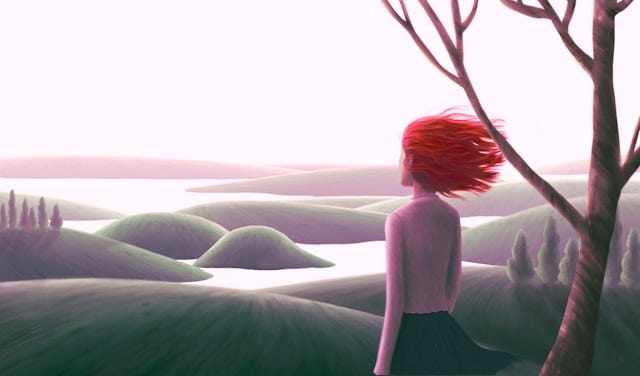
Photo by Unsplash
You will look back on this as a fairytale. For a little while anyway.
Then you will look back on it as the opening lines of a tragedy; the beginning of a shameful destruction of much of what you believed was safe and true.
It even starts like a fairytale with you wandering the hills alongside her on that spring afternoon, talking about your losses, about your deepest fears and longings. And you are well aware of the power of this scene. You have flirted in this realm many times before; you know that your comfort with darkness is seductive to others. Planning walks like this had been a strategy your whole life. You have used these walks to hook people in. Step by step, you’d open yourself, and you’d open them; dangling your own vulnerabilities until your victims took the bait and laid themselves emotionally bare at your feet.
It’s a kind of flirting with intensity that you have found irresistible. Somewhere you hoped that by stitching intensity to intensity like a string of fairy lights you could ease the weight of the darkness.
Or maybe, more tragically, you believed these fairy lights would eventually banish the darkness from your own hungry soul.
That was a lot to ask from some small flashes in the dark.
You were newly striding around in a life that you felt was grown up. You had arrived in a version of adulthood that finally felt safe and settled. At last, you had inoculated yourself against terror. But what you didn’t realise was that this moment of painlessness was fertile soil for you to learn that perfection is no destination; it cannot be grasped and secured. We cannot prevent pain any more than we can capture the breeze in a bottle.
And there you go again, philosophising, trying to paint some magic into tragedy.
You will go back to that spring moment again and again, you will scour the contours of those hills, attempt to untangle the narrative of the morning, the days, the weeks before this: how could it have happened?
You will try to imagine the you who existed before you were struck by this bolt of lunchtime lightning which scorched the gentle unsuspecting life you knew. You will try to remember what it felt like to be aware of yourself, aware of your truth. You will be surprised at how easy it was in the end to be catapulted out of this known safety and into a world with more darkness, more loss, more fear than you have (at least consciously) ever known.
But this catapulting had something to show you.
There was something spoken, something she said. You longed for it. It tickled your ego. You even predicted what she was going to say. It tugged at the corner of your hero’s cape: “Can you help me?” She said. “You have been here before, so you can show me the way? I love how you do it. I love you.”
And it’s that moment where the slow-motion replay gets stuck. You used to think that was the moment you noticed her; but that’s not true.
It wasn’t about her. It was never about her.
Of course, you couldn’t resist this worship. Inevitably, you couldn’t tolerate it either, so something true had to fall. So you dropped to your knees, and, moving your hand behind your back, you gently lay down your truth in the long grass.
“Shh,” you said to the breeze, as you secretly asked it to sweep away your truth, while holding out the other hand to take hers. Ah, of course you did. Because in your eyes, the steady truth you carried was easily outshone by the urgency of hers.
You believed that if you could hold her truth with enough conviction that it could also become your truth; that you could defy loss and keep this one close forever.
If I could find a way to get a message to you there in that moment I would. Though what I would say is less clear. Would I tell you to run?
Would I tell you to just hold up a gentle palm to her need, walk yourself off the hillside to your own home, to your gentle, steady life?
Would I scream at you to come to your senses, to reel in your ego?
Or would I turn your head towards me and, with overdue tenderness, say, ‘it’s ok little one. There is a part of you that has wanted to hear this declaration for years. But actually, you have heard this before; it never stuck then either. It never did banish the longing. It never will. Nobody can be that for you. She is not your anchor. Moreover, this one is not who you think she is; her promises are too thin to protect you from the howl of emptiness which has lived inside you. She is more lost than you are.’
I see it all now, so clearly. I see that this hillside was the inevitable next stop on your journey: all the years before had delivered you here. You had been drowning in a loneliness so deep you felt untethered from the world. Cut loose.
There was a tiny petrified little you who was woken up by those words of adoration she uttered. That part of you, that’s the bit you need to go back to. Listen to it. Just listen. Go back to that hillside and listen to the noise of the yearning. Can you feel it. Can you hear it?
Behind the noise of the breeze… Behind the noise of what you hoped she’d say… Behind this ugly insatiable racket that the moment was promising you… Behind all of that is a silence.
Inside that silence is a small girl who was so lost she feared extinction. But being lost does not separate you from humanity my love. There is no danger in being lost. People get lost; that’s why we have maps. Being lost is woven into being human just as shadows are woven into light. The danger isn’t being lost, the danger comes from thinking someone else has the map.
The way from lost to found is no fairytale. It’s a brutal series of post-mortems of everything you have spent a lifetime turning away from.
And of course there’s shame. Once we find our way back to our own path, or rather, once we can feel our feet on the ground again, then we have to look at how we got there: What did we not see? Then, we must inevitably examine the devastation we wreaked while we were off our heads on the high of this cosmic fairytale. The endless sky of this obsession was nobody’s airspace. Taking responsibility for what happened when we were floating, careening, spiralling, fantasising… That calls for ruthless honesty. It calls for redress. Of course it does. It calls, too, for grace; and grace is the part you never thought you deserved.
And so, can you see now, my love, that the only way to look back on this is to see it as neither fairytale nor tragedy; rather it is the beginning of truth. Truth that untangled a lifetime of wiring and, ultimately, set you free.
[Guest Submission by psychotherapist Nadine Pittam]
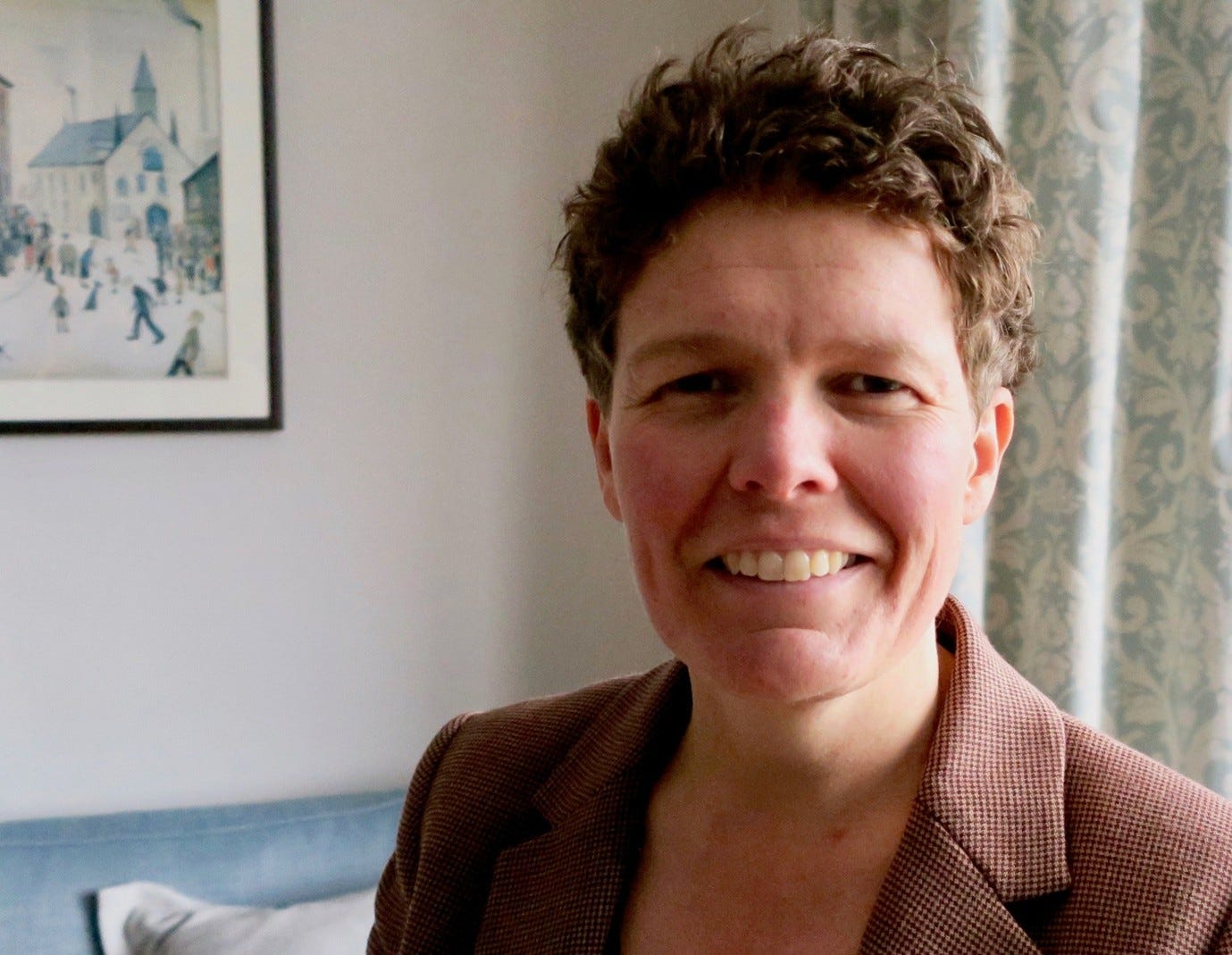
Nadine Pittam is a psychotherapist working with individuals and couples in Manchester, UK. As well as helping people with broader issues such as anxiety, depression, intrusive thoughts, self-esteem etc, Nadine has a specialist interest in helping individuals and couples better navigate relationship patterns and difficulties.
“I work a lot with people who suffer in painful relational dynamics,” says Nadine. “And limerence is a major part of that. Limerence is such a powerful force, it can sweep through someone’s life and destroy almost all of it. It’s such a privilege to be able to help people find freedom from that.”
Nadine has delivered CPD lectures for therapists on the subject of limerence, she also runs regular in-person limerence workshops in Manchester. To find out more, visit www.nadinepittam.com